excelsior!
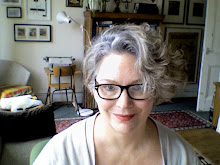
 One thing that happens when you go baroque is that you have a lot of time on your hands, and I have used some of this time doing something I thought I'd practically given up: reading novels. It's great! The new reading glasses (dark purple, rimless at the bottom, v cute) are really helping. Just finished Michel Houellebecq's bleak, brilliant Atomised, having let it sit on the shelf for years. It's the kind of book that makes you see everything else through its lens for some time after reading it.*
And is it me, or have people largely missed his point? Is he really, ultimately, saying mankind is better off without sexual procreation and/or death? See, I'm not seeing that. I'm seeing massive irony. Some reviewers admitted the book is funny - and it is - but then the humour they cite isn't where I see humour. I thought the end of the book, which also amounts to the premise of it, was the funniest part. It makes the whole thing a farce, in the good sense of the word. A fantasia. (I just feel sorry for the cows.)
The very dialectical structure of the book rules this conclusion out, in any case, whatever Houellebecq may be saying to interviewers. (He's the kind of guy who, if he can say something to an interviewer, he will. And he'll be drunk when he says it.) The whole novel is organised on a twin structure. Two protagonists, two outlooks, and the main main character Michel's scientific musings are predicated on alternatives, options, second ways. In other words, the splitting of the cell into two is what gives life, and death is the dance partner of life. Blah blah. Of course, being brilliant, Houellebecq never stoops to saying that, as I just have.
I can see where the charges of misogyny came from - it is interesting that every woman in the book who has anything to do with sex (except the mother; she gets special treatment and anyway is not a recreationally sexual character. She exists to provide the novel with its two protagonists) - as I say, all the sexual women in the book end up dying by suicide. But I'm not seeing this as misogyny. It's more like, look what this attitude - the attitude/s expressed by our characters Michel and Bruno - does to women.
Where the character Annabelle describes her lifetime experience of sex - and it is bleak, I'll say that - I (depressingly, but that's another post) found myself nodding in recognition. And it's all inside the structure of Houellebecq's argument, anyway. So you can't disagree. And he's just as tough on men. Michel never gets to enjoy sex at all, and Bruno goes insane.
In fact, and this is one of the great things about the book, Bruno was insane all along. He just didn't call himself insane. There's a point in the story where he simply goes: that's it, I'm going to be in the asylum forever now. It's brilliant.
I think it's safe to say Houellebecq hates everyone equally. And I'd also say he only hates us because he loves us.
I'm after Platform now, but all I've found is a first edition for £20. Has it been suppressed?
*Untold years ago this also happened to me after seeing Back to the Future. Which was more worrying?







No comments:
Post a Comment